
Meat processing wastewater treatment equipment: a key tool to solve environmental problems in the industry
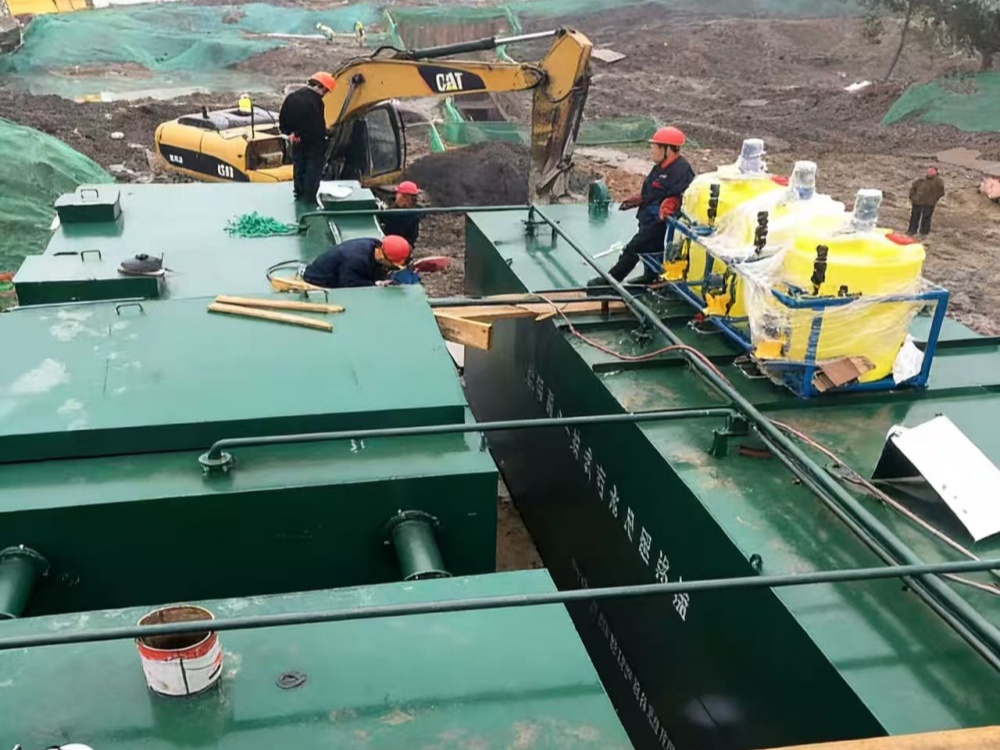
Against the backdrop of rapid development in the meat processing industry, the environmental pressure caused by wastewater discharge is becoming increasingly prominent. The wastewater generated during meat processing contains a large amount of oil, protein, suspended solids, and organic pollutants. If discharged directly without effective treatment, it will not only cause eutrophication of water bodies and disrupt ecological balance, but also pose a threat to the health of surrounding residents. In this context, meat processing wastewater treatment equipment, with its efficient pollutant removal capacity, has become the core equipment for the industry to achieve green production, widely used in the entire industry chain such as slaughtering, meat product processing, and livestock breeding.
From a technical perspective, meat processing wastewater treatment equipment achieves deep purification of complex wastewater through multi-stage collaborative treatment processes. In the pretreatment stage, the grid cleaning machine and the oil separation sedimentation tank are the core equipment. The former can quickly intercept large particles of impurities such as livestock and poultry hair and broken bones in the sewage, while the latter uses the principle of gravity separation to remove floating oil and some suspended solids, reducing the load for subsequent treatment. Entering the biochemical treatment stage, the mainstream combination process of UASB anaerobic reactor and MBR membrane bioreactor has shown significant advantages: UASB reactor can decompose high concentration organic pollutants into clean energy such as methane in anaerobic environment, achieving resource recovery; The MBR membrane module significantly improves the effluent quality by intercepting activated sludge and large molecular organic matter, achieving a COD (chemical oxygen demand) removal rate of over 95% and a suspended solids removal rate of nearly 100%. In addition, some devices are also integrated with advanced processing units, such as ozone oxidation towers or activated carbon filters, which can further degrade difficult to degrade organic matter, ensuring that the effluent meets the direct discharge requirements of the "Water Pollutant Discharge Standards for Meat Processing Industry" (GB 13457-92).
In practical application scenarios, the adaptability and economy of such devices have become the key to promoting their popularity. For large slaughter enterprises, modular designed sewage treatment equipment can be flexibly combined according to daily processing capacity (from hundreds to thousands of tons), achieving continuous and automated operation and reducing manual operation costs; Small and medium-sized meat processing plants can choose integrated equipment, which occupies only one-third of the traditional processing facilities, has a short installation cycle, and has intelligent monitoring function. Through the PLC control system, the operating parameters are adjusted in real time, reducing the difficulty of operation and maintenance. Taking a large beef cattle slaughtering enterprise as an example, the intelligent meat processing wastewater treatment system introduced not only achieves standard discharge of wastewater, but also creates additional economic benefits of over 500000 yuan annually for the enterprise through the resource utilization of sludge (converted into organic fertilizer).
With the continuous tightening of environmental policies and the upgrading of industry green transformation needs, meat processing wastewater treatment equipment is developing towards higher efficiency, energy conservation, and intelligence. In the future, remote monitoring systems combined with IoT technology and process optimization models based on big data will further improve the operational efficiency and environmental benefits of equipment, providing strong support for the sustainable development of the meat processing industry
image:
- Previous:Already the first article
- Next:Already the last article
CONTACT US
Weifang Kehang Environmental Protection Technology Co., Ltd
Headquarters Address: No. 18 Changqing Street, Junbukou Industrial Park, Weicheng District, Weifang City, Shandong Province
Headquarters phone number: 0086 18905367584/13869601795
Service Hotline: 0086-536-2259698/0536-8803882
National complaint hotline: 400-9700918

Scan to follow WeChat official account