
Rural sewage treatment plants
New rural sewage treatment equipment technology
The process flow is simple, the equipment operation is reliable, and the operation is easy: the contact oxidation method has rich biological phases and high concentrations of biomass, and has a high volumetric load in operation, and can adapt to the impact of high loads, resulting in less sludge generation. Due to the much better settling performance of attached biofilm carriers compared to activated sludge, filamentous bacteria attached to the membrane are less likely to cause sludge swelling hazards. And it has a certain ability to remove phosphorus and nitrogen, which can ensure the quality of the effluent.
It has strong resistance to shock loads caused by changes in sewage quality and quantity, and has a significant buffering effect on pH and toxic substances.
The process flow is simple, the equipment operation is reliable, and the operation is easy: the contact oxidation method has rich biological phases and high concentrations of biomass, and has a high volumetric load in operation, and can adapt to the impact of high loads, resulting in less sludge generation. Due to the much better settling performance of attached biofilm carriers compared to activated sludge, filamentous bacteria attached to the membrane are less likely to cause sludge swelling hazards. And it has a certain ability to remove phosphorus and nitrogen, which can ensure the quality of the effluent.
It has strong resistance to shock loads caused by changes in sewage quality and quantity, and has a significant buffering effect on pH and toxic substances.
4. Sedimentation tank
The sedimentation tank is used to remove suspended solids in water through sedimentation, and the removal of SS in sewage mainly relies on sedimentation. The sedimentation tank consists of five parts: inlet area, outlet area, sedimentation area, sludge storage area, and buffer zone. The function of the inlet and outlet zones is to maintain a uniform and smooth flow of water in and out, in order to improve sedimentation efficiency. The sedimentation zone is the main part of the pond. The sludge storage area is a place where sludge is stored, concentrated, and discharged. The buffer zone is located between the sedimentation zone and the sludge storage zone, and its function is to prevent water flow from carrying away the sludge settled at the bottom of the tank.
5. Filter processing
To further improve the effluent quality, remove suspended impurities in the water, and reduce the organic content in the sewage, the sewage is subjected to secondary filtration treatment after sedimentation treatment.
The packing material used in high-efficiency filters has the advantages of low filtration resistance, large specific surface area, strong acid and alkali resistance, and good pollution resistance. The filter material has strong adaptability to raw water concentration, operating conditions, pre-treatment processes, etc., that is, the filter bed automatically forms an upper sparse and lower dense state during filtration, which is conducive to ensuring the effluent quality under various operating conditions. During backwashing, the filter material is fully dispersed, and the cleaning effect is good. Efficient filters can effectively remove suspended solids in water and have a significant removal effect on pollutants such as colloids, iron, organic matter, manganese, bacteria, and viruses in water.
The use of filtration method for deep treatment of wastewater has the following advantages:
(1) High efficiency: can work 24 hours without interruption.
(2) Low maintenance cost: During its operation, there are no other rotating parts except for the packing, so the failure rate is low and maintenance costs are saved.
(3) Low one-time investment: The high-efficiency filter has the effect of coagulation and clarification, so there is no need to build additional facilities such as coagulation tanks and clarification tanks. The process volume is small, and the one-time investment is saved.
(4) Stable effluent quality and good filtration effect: can ensure high-quality and stable effluent effect, without periodic water quality fluctuations.
(5) Easy to renovate and expand: The unit operation method used can flexibly increase or decrease the number of filters according to changes in water volume, making it easy to renovate and expand.
(6) Small footprint and beautiful appearance: using high-efficiency filters, the traditional three-stage (coagulation, clarification, filtration) treatment process can be integrated into one, saving about 70% of the footprint; The appearance can be designed in various shapes according to requirements, with spray colors for a beautiful and compact appearance.
6. Disinfection treatment
After biochemical treatment, except for some bacteria settling down with the sludge, most pathogenic bacteria such as Escherichia coli and fecal streptococcus still exist in the sewage and must be disinfected. This system uses chlorine dioxide method for disinfection. The disinfection pool adopts a laminar flow partition contact reaction device to improve the contact time and achieve better disinfection effect.
After sales service of new rural sewage treatment equipment products
Our company is responsible for the manufacturing of equipment and the delivery and use of the entire equipment. During the production and delivery period of the equipment, our company is responsible for on-site installation and commissioning of the equipment.
Our company guarantees that any damaged or defective contract components or parts during the installation, commissioning, and operation of the equipment can be easily repaired and replaced.
During the use of the equipment, if any quality problems occur, our company is able to provide timely technical service requirements to the owner. During the warranty period, after the owner issues a notice, our company provides timely maintenance services, free repair or replacement of damaged parts and components, to ensure the normal operation of the equipment.
Overview
Wastewater generated during human life is one of the main sources of water pollution. Mainly feces and washing wastewater.
The sewage discharge of this project is 10m3/d. In order to protect the environment and eliminate pollution, a domestic sewage treatment facility is planned to be built in the community to ensure that the treated wastewater meets the "Pollutant Discharge Standards for Urban Sewage Treatment Plants" (GB18918)
After carefully analyzing the quality of the sewage, our company has summarized and referred to the experience of previous domestic sewage treatment projects, consulted a large amount of information, and referred to industry data to prepare the "Design Scheme for Domestic Sewage Treatment Projects" for review by relevant experts and selection by owners.
Design water quality and quantity
3.1 Design processing scale
The main purpose of this project is to treat domestic sewage, with a designed flow rate of 10m3/d.
3.2 Design inlet and outlet water quality
Raw water quality: The raw water quality of this project is based on empirical data, as follows:
BOD5 900mg/l CODCr 1500mg/l SS 400mg/l TN 150mg/l
NH3-N 80mg/l TP 4mg/l pH 6.5~8.5
The effluent meets the 'Pollutant Discharge Standards for Urban Wastewater Treatment Plants' (GB18918)
as follows:
Number: Project
4. Process selection and description
4.1 Process selection
1. Characteristics of domestic sewage
① Wastewater has good biodegradability and fast biodegradation rate, making it suitable for biological treatment;
② Wastewater contains a large amount of bacteria, viruses, parasite eggs, and some toxic and harmful substances, which must be disinfected before discharge;
③ The quality and quantity of sewage fluctuate greatly, and it is necessary to strengthen regulation to stabilize the quality and quantity of sewage and avoid the impact of shock loads on biological treatment facilities;
④ Wastewater contains a large amount of suspended solids such as feces, which are mostly sedimentable and decomposable. Therefore, it is necessary to strengthen the pretreatment process of wastewater to remove these suspended solids and reduce the load on subsequent treatment processes.
In short, domestic sewage not only contains organic pollutants, but also a large number of pathogenic microorganisms. Therefore, in the process of reclaimed water treatment, not only should the hygiene indicators of disinfection and sterilization be considered, but also environmental indicators such as COD and BOD should be taken into account.
2. Process comparison and selection
(1) Comparison and selection of biological treatment processes
Small sewage treatment plants generally adopt the following biological treatment methods:
① Conventional activated sludge process
The conventional activated sludge process is widely used in large-scale sewage treatment, but due to its low load, easy sludge expansion, and difficulty in control and management, its use in small-scale sewage treatment plants has been decreasing in recent years.
② A/O process
The A/O process uses activated sludge as a biological carrier and achieves oxygenation of wastewater through the action of fan oxygen supply and aeration. Mechanical agitation is installed in tank A, and the reflux liquid from tank O flows back to tank A. Denitrification reaction is carried out in tank A, reducing most of the nitrate nitrogen to nitrogen gas, and the nitrogen gas overflows from the wastewater through agitation, achieving the goal of removing ammonia nitrogen; The effluent from tank A flows to tank O, which is equipped with blast aeration to remove most organic pollutants and convert most of the ammonia nitrogen in the influent into nitrate nitrogen; The concentration of activated sludge in the O-stage tank can be adjusted according to the needs of the wastewater, and the organic matter in the wastewater can be adsorbed, oxidized, and decomposed through the microbial flocs in the activated sludge; High removal rate of organic matter and ammonia nitrogen. However, due to the lack of an independent sludge return system, it is not possible to cultivate sludge with * function, and the degradation rate of difficult to degrade substances is relatively low; At the same time, in order to improve denitrification efficiency, it is necessary to increase the internal circulation ratio, which increases operating costs. In addition, the internal circulation liquid comes from the aeration tank and contains a certain amount of DO, which makes it difficult to maintain the ideal anoxic state in section A, affecting the denitrification effect and making it difficult to achieve a denitrification rate of 90%.
③ SBR method
SBR method is a relatively good activated sludge treatment method developed in recent years. This treatment process integrates an aeration tank and a sedimentation tank, with continuous water inflow, intermittent aeration, and sewage sedimentation and removal of supernatant when the gas is stopped, forming a cycle that repeats itself. The SBR method does not have sedimentation tanks or sludge return equipment, but it operates intermittently and requires multiple treatment units. The inflow and aeration are switched between each other, making the control more complex. In order to ensure the overflow rate, the SBR method requires high manufacturing standards for the decanter equipment, and must strive for excellence during production, otherwise it is easy to cause the final effluent water quality to not meet the standards. At present, there are no high-quality decanting equipment in China, and the procurement of imported equipment is troublesome and expensive. At the same time, the maintenance costs will also be high in the future. The sludge concentration in the SBR process tank is measured by a concentration meter to control the amount of excess sludge discharged. Currently, the immaturity of concentration meter technology in China can lead to difficulties in controlling SBR sludge discharge.
④ Contact oxidation method
The biological contact oxidation method is a traditional biochemical treatment method, in which the biological filler is a semi soft filler on a fixed bed. Using semi soft fillers as attachment carriers for microorganisms. The organisms are evenly distributed on the biological packing, which avoids the phenomenon of uneven distribution of microorganisms. At the same time, the organisms adhere to the surface of the packing and do not flow with water. Due to the strong agitation of the rising airflow, the biofilm is constantly renewed, thereby improving the purification effect. The contact oxidation method has the advantages of short treatment time, small volume, good purification effect, good and stable effluent quality, no need for sludge reflux or expansion, and low power consumption.
The main characteristics are:
High volumetric load and strong resistance to impact load;
Having the advantages of membrane method, with less residual sludge;
It has the advantages of activated sludge process, supplemented by mechanical equipment for oxygen supply, high biological activity, and short sludge age;
Can decompose substances that are difficult to decompose by other biological treatments;
Easy to manage, eliminating drawbacks such as sludge flotation and expansion.
From the above comparison, it can be seen that chlorine dioxide not only has strong disinfection ability and good effect, but also has small side effects, low equipment investment, and low operating costs. The application of chlorine dioxide disinfection is becoming increasingly widespread, and the use of chlorine dioxide disinfection in this project is a better method.
3. Process selection
Based on the principle of low investment and high efficiency, and prioritizing the use of technologies suitable for China's national conditions, according to the current situation of domestic sewage treatment technology, and after comprehensive investigation of various wastewater treatment technologies, combined with the actual situation of this project, due to the small amount of sewage generated in this project, in order to reduce civil construction costs, this project plans to use integrated sewage treatment equipment to treat the project wastewater. The integrated sewage treatment equipment adopts
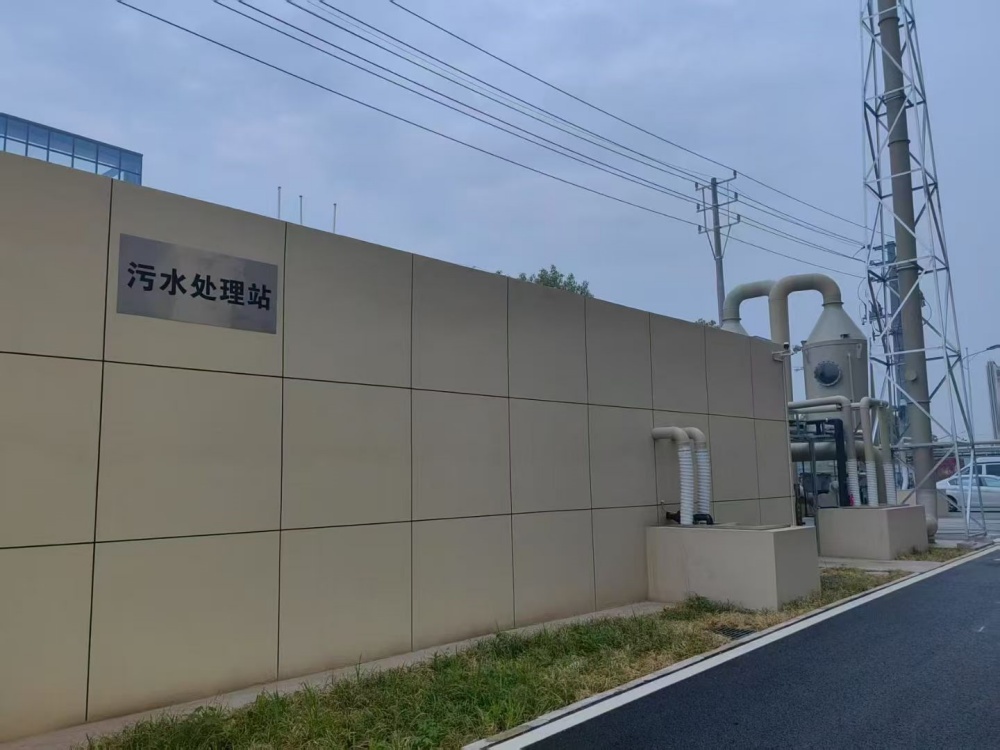
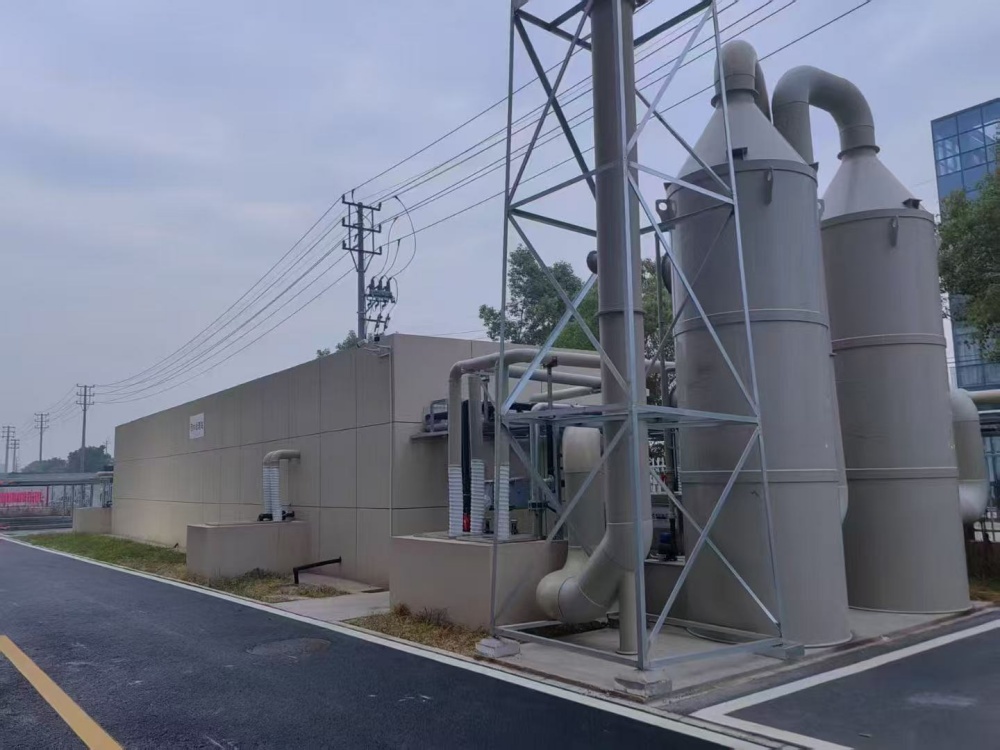
Life Integrated Sewage Treatment Equipment Free Installation, Debugging, Transportation, and Good After sales Service
Process technology characteristics
1. Regulation of sewage
Due to the significant fluctuations in water quality and quantity of domestic sewage, it is necessary to strengthen regulation to stabilize the water quality and quantity of sewage, in order to ensure the effectiveness of subsequent biochemical treatment.
2. Hydrolysis acidification reaction
Due to the low organic concentration of this type of wastewater, based on our company's experience in treating low concentration organic wastewater, anaerobic digestion treatment is not necessary and only hydrolysis acidification process is required. The bacteria involved in the hydrolysis and acidification process are hydrolysis bacteria and acid producing bacteria, both of which operate under anaerobic conditions and do not require dynamic aeration. Therefore, the hydrolysis and acidification tank can partially degrade organic matter without energy consumption, reducing operating costs; At the same time, acid hydrolyzing bacteria can convert large molecules of difficult to degrade organic matter into small molecules of easily degradable organic matter, improving the treatment efficiency of subsequent aerobic treatment units. The use of hydrolysis acidification process can greatly shorten the time required for aerobic biochemistry; After simultaneous treatment, the effluent quality is better, which not only saves investment and operating costs, but also improves environmental benefits.
3. Aerobic contact oxidation reaction
Biochemical treatment mainly uses aerobic treatment to remove the vast majority of organic matter in wastewater by relying on the adsorption and degradation of aerobic microorganisms, while providing sufficient dissolved oxygen in the wastewater.
The aerobic biological treatment methods for wastewater are mainly divided into activated sludge method and biofilm method, both of which are commonly used domestically and internationally and have relatively mature processes. The biofilm method is divided into three categories based on the attachment of different biofilm materials: biological disc, biological filter, and contact oxidation method. With the development of the chemical industry, biological fillers are constantly being updated, from the original plastic honeycomb fillers to soft fillers and then to semi soft fillers. The contact oxidation method is becoming increasingly effective. Due to the rich biological phase of contact oxidation, especially in low concentration wastewater treatment, the contact oxidation method has gradually replaced the activated sludge method. The contact oxidation method has the following characteristics:
Rich biological phase: There is abundant dissolved oxygen and organic matter in the contact oxidation tank. Under the intense mixing of gas and water, the mass transfer process of organic matter is accelerated, and the renewal of membrane surface water and biofilm is conducive to the growth and proliferation of microorganisms. Therefore, the biological phase on the biofilm is very rich. There are bacteria, jersey bacteria, filamentous fungi, protozoa, and protozoa that form organic matter
- Previous:Composition structure and treatment process of integrated sewage treatment equipment
- Next:Already the last article
CONTACT US
Weifang Kehang Environmental Protection Technology Co., Ltd
Headquarters Address: No. 18 Changqing Street, Junbukou Industrial Park, Weicheng District, Weifang City, Shandong Province
Headquarters phone number: 0086 18905367584/13869601795
Service Hotline: 0086-536-2259698/0536-8803882
National complaint hotline: 400-9700918

Scan to follow WeChat official account