

- Integrated sewag...
- Dental clinic se...
- Laboratory sewag...
- Waste gas treatm...
Integrated sewage treatment equipment
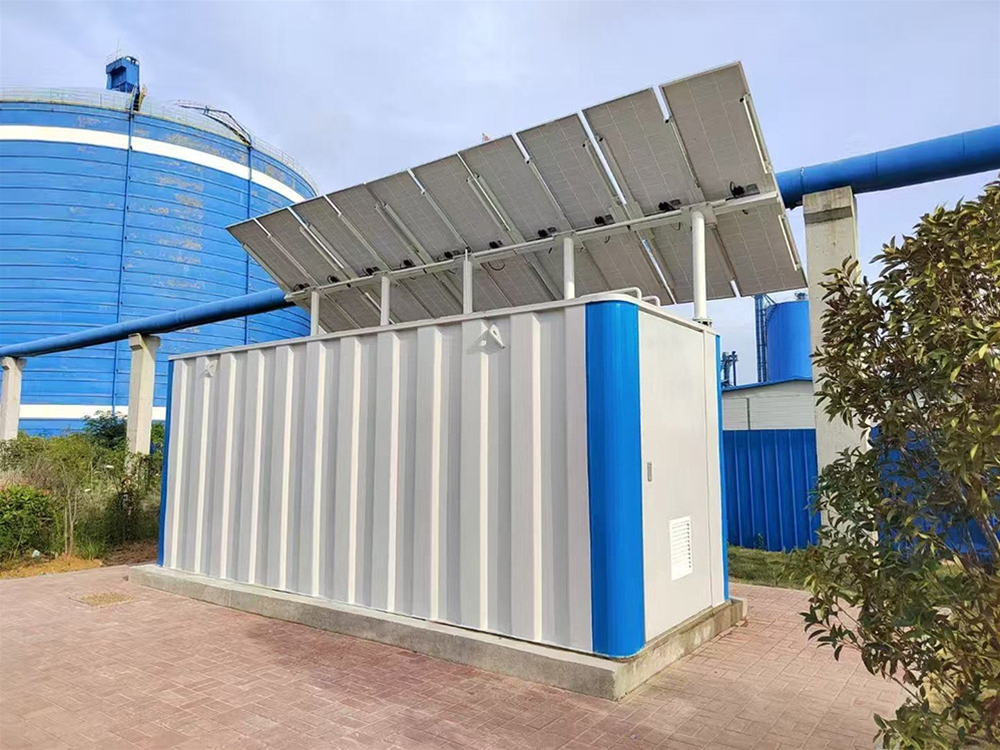
Details
Key Advantages of Solar-Powered Wastewater Treatment Equipment
I. Environmentally Friendly, Energy-Efficient and Carbon-Neutral Operation
• Clean energy-driven: Utilises solar power as the primary energy source, replacing traditional mains electricity, with zero carbon emissions, fully aligning with the ‘dual carbon’ targets and environmental policies.
• Significantly reduced energy costs: No electricity bills are incurred, making it particularly suitable for remote areas without grid access; long-term operating costs are far lower than those of traditional equipment.
• Surplus Electricity Can Be Fed into the Grid or Stored: When paired with energy storage batteries, the system generates power during the day and continues to operate at night, ensuring 24-hour uninterrupted power supply; surplus electricity can also be fed into the grid to generate revenue.
II. Flexible Deployment, Unrestricted by Location
• No Need to Connect to the Municipal Grid: Particularly suitable for remote rural areas, scenic spots, islands, construction sites and other locations without mains electricity or with unstable power supply, solving the ‘last mile’ challenge in wastewater treatment.
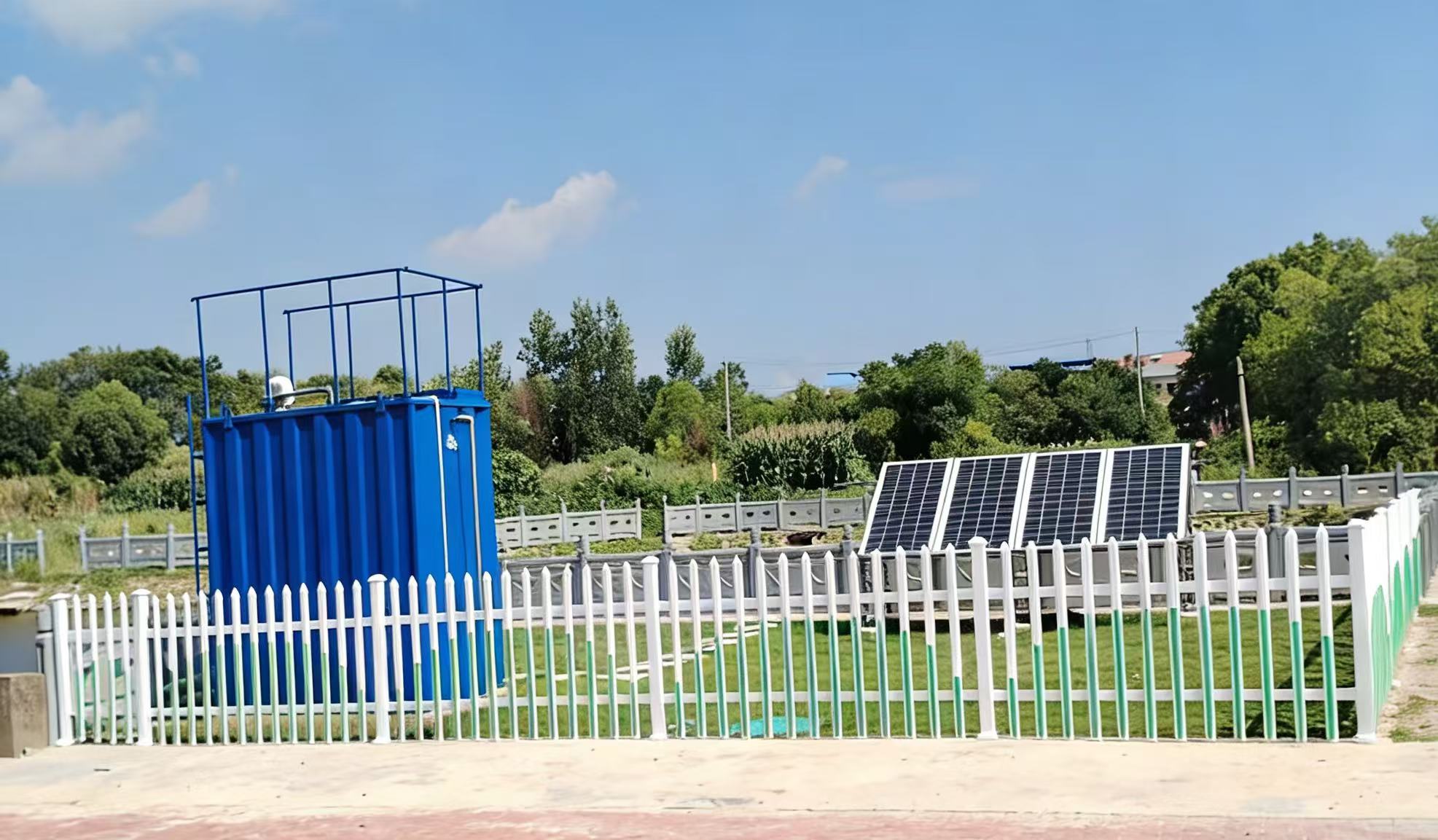
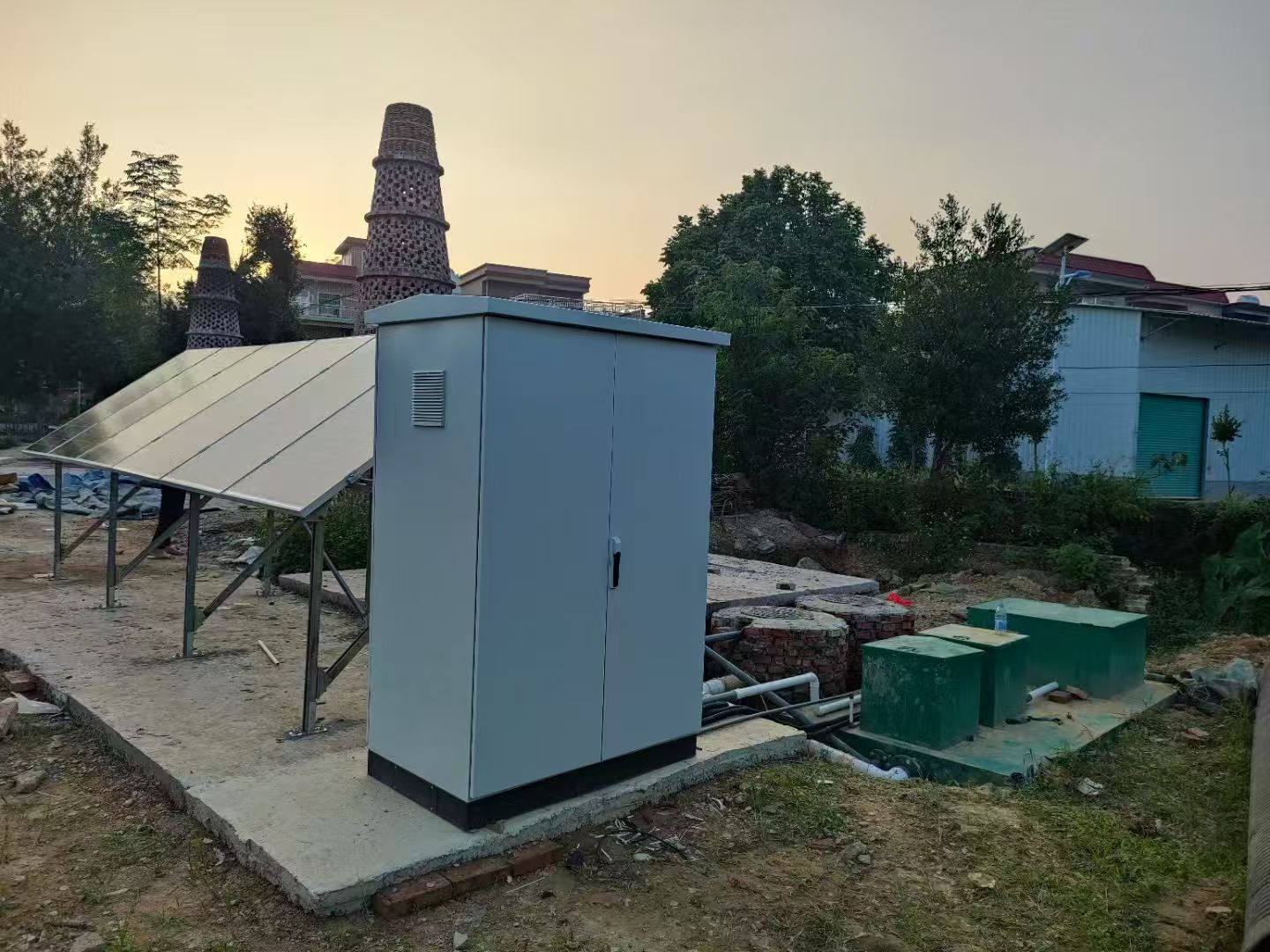
• Modular integration: Solar panels, energy storage batteries and wastewater treatment equipment are integrated into a single skid-mounted unit, allowing for rapid relocation and reuse, making it suitable for temporary projects or emergency treatment.
• Compact footprint, flexible siting: Solar panels can be mounted on the roof of the unit or in surrounding open spaces, without occupying significant additional land, and with minimal requirements regarding terrain or geology.
III. Simple operation and maintenance, high reliability
• Unattended operation: Equipped with an intelligent control system, it can automatically start and stop operations, adjust aeration levels, and monitor water quality and power generation, eliminating the need for 24-hour supervision.
• Low failure rate and easy maintenance: The absence of complex power transmission lines reduces faults such as cable ageing and short circuits; core components have a long service life, requiring only routine cleaning of the solar panels and simple inspections.
• High resilience to disasters: The system can continue to operate independently even when the power grid is paralysed by disasters such as earthquakes or floods, ensuring basic wastewater treatment functions and preventing secondary pollution.
IV. Outstanding environmental and social benefits
• Fully green, closed-loop process: From energy supply to wastewater treatment, the entire process involves no consumption of fossil fuels, and the effluent consistently meets discharge standards, truly achieving the dual benefits of ‘pollution control and carbon reduction’.
• Enhanced Brand Image: As ‘zero-carbon environmental equipment’, it can serve as an environmental demonstration project for enterprises or villages, highlighting social responsibility and supporting applications for green ratings and policy subsidies.
• Silent and Non-Disruptive: Compared to diesel generator power supply, the solar system operates without noise or exhaust emissions, making it friendly to local residents and the ecological environment.
V. Economic Viability and Long-Term Value
• One-off Investment, Long-term Returns: Although the initial purchase cost is slightly higher, the savings on electricity bills can be recouped within 5–8 years, and the equipment has a service life of over 20 years.
• Policy Subsidy Support: Many regions offer dedicated subsidies for distributed photovoltaic systems and rural wastewater treatment, further lowering the investment threshold.
• Compatibility with Multiple Processes: Can be integrated with mainstream wastewater treatment processes such as MBR, A/O and biological filters, meeting the needs of various scenarios including domestic sewage, medical wastewater and small-scale industrial effluent.
VI. Key Advantages of Solar-Powered Wastewater Treatment Equipment
I. Environmentally Friendly, Energy-Efficient and Carbon-Neutral Operation
• Clean energy-driven: Utilises solar power as the primary energy source, replacing traditional mains electricity, with zero carbon emissions, fully aligning with the ‘dual carbon’ targets and environmental policies.
• Significantly reduced energy costs: No electricity bills are incurred, making it particularly suitable for remote areas without grid access; long-term operating costs are far lower than those of traditional equipment.
• Surplus Electricity Can Be Fed into the Grid or Stored: When paired with energy storage batteries, the system generates electricity during the day and continues to operate at night, ensuring 24-hour uninterrupted power supply; surplus electricity can also be fed into the grid to generate revenue.
VII. Flexible Deployment, Unrestricted by Location
• No Need to Connect to the Municipal Grid: Particularly suitable for remote rural areas, scenic spots, islands, construction sites and other locations without mains electricity or with unstable power supply, solving the ‘last mile’ challenge in wastewater treatment.
• Modular integration: Solar panels, energy storage batteries and wastewater treatment equipment are integrated into a single skid-mounted unit, allowing for rapid relocation and reuse, making it suitable for temporary projects or emergency treatment.
• Compact footprint, flexible siting: Solar panels can be mounted on the roof of the unit or in surrounding open spaces, without occupying significant additional land, and with minimal requirements regarding terrain or geology.
8. Simple operation and maintenance, high reliability
• Unattended operation: Equipped with an intelligent control system, it can automatically start and stop operations, adjust aeration levels, and monitor water quality and power generation, eliminating the need for 24-hour supervision.
• Low failure rate and easy maintenance: The absence of complex power transmission lines reduces faults such as cable ageing and short circuits; core components have a long service life, requiring only routine cleaning of the solar panels and simple inspections.
• High resilience to disasters: The system can continue to operate independently even when the power grid is paralysed by disasters such as earthquakes or floods, ensuring basic wastewater treatment functions and preventing secondary pollution.
IX. Outstanding environmental and social benefits
• Fully green, closed-loop process: From energy supply to wastewater treatment, the entire process involves no consumption of fossil fuels, and the effluent consistently meets discharge standards, truly achieving the dual benefits of ‘pollution control and carbon reduction’.
• Enhanced Brand Image: As ‘zero-carbon environmental equipment’, it can serve as an environmental demonstration project for enterprises or villages, highlighting social responsibility and supporting applications for green ratings and policy subsidies.
• Silent and Non-Disruptive: Compared to diesel generator power supply, the solar system operates without noise or exhaust emissions, making it friendly to local residents and the ecological environment.
X. Economic Viability and Long-Term Value
• One-off Investment, Long-term Returns: Although the initial purchase cost is slightly higher, the savings on electricity bills can be recouped within 5–8 years, and the equipment has a service life of over 20 years.
• Policy Subsidy Support: Many regions offer dedicated subsidies for distributed photovoltaic systems and rural wastewater treatment, further lowering the investment threshold.
• Compatibility with Multiple Processes: Can be integrated with mainstream wastewater treatment processes such as MBR, A/O and biological filters, meeting the needs of various scenarios including domestic sewage, medical wastewater and small-scale industrial effluent.
XI. Key Advantages at a Glance
Dimension Core Value
Energy Supply Solar-powered, zero electricity costs, zero carbon emissions
Geographical Adaptability Operates without a grid connection, the preferred choice for remote locations
Operational and Maintenance Costs Unattended operation, low failure rate, simple maintenance
Environmental Benefits Pollution control + carbon reduction, in line with green development trends
Long-term Value Long service life, high returns, eligible for policy subsidies
CONTACT US
Weifang Kehang Environmental Protection Technology Co., Ltd
Headquarters Address: No. 18 Changqing Street, Junbukou Industrial Park, Weicheng District, Weifang City, Shandong Province
Headquarters phone number: 0086 18905367584/13869601795
Service Hotline: 0086-536-2259698/0536-8803882
National complaint hotline: 400-9700918

Scan to follow WeChat official account