
- Integrated sewag...
- Dental clinic se...
- Laboratory sewag...
- Waste gas treatm...
Integrated sewage treatment equipment
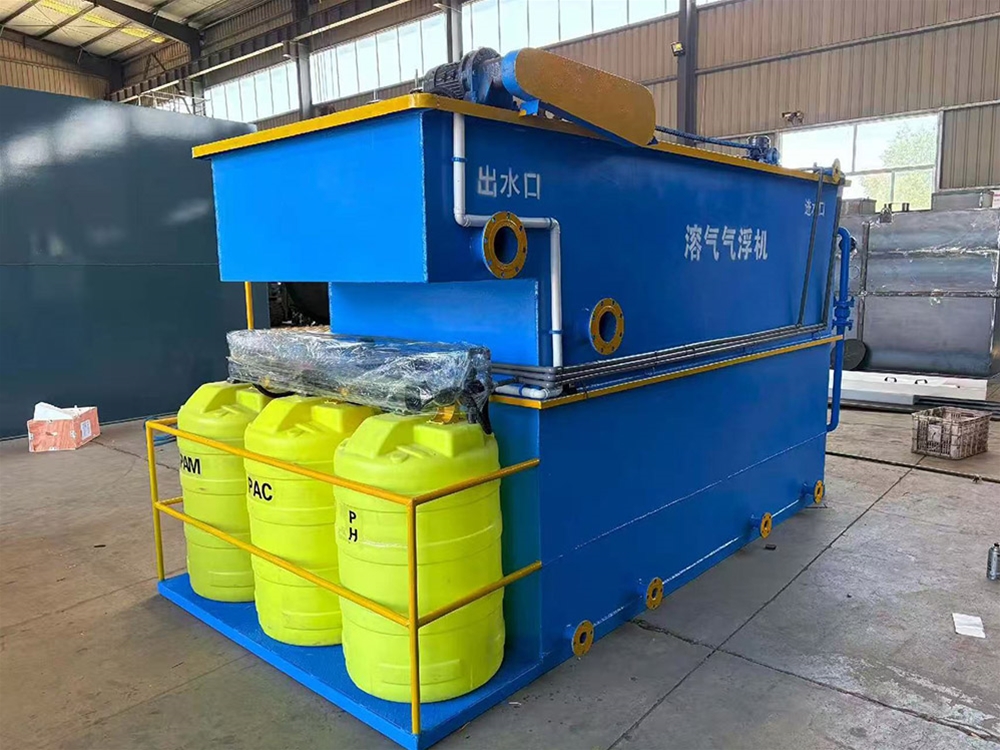
Details
Applications for dissolved air flotation units:
1. Oily wastewater (ideal application) 💧
This is the most traditional and core application area for dissolved air flotation units, where separation efficiency is at its highest.
• Oil and petrochemical industry: Oil production wastewater, oily wastewater from refineries.
• Catering industry: Oil-containing wastewater from restaurants, canteens and food processing plants (effluent from grease traps).
• Meat processing: Animal fats in wastewater from slaughterhouses and meat processing plants.
2. Wastewater with high levels of suspended solids or high concentrations of organic matter 🧹
Designed for impurities that are ‘heavy and viscous’, which neither sink nor float.
• Paper industry: Recovery and separation of suspended solids such as pulp, fibres and ink.
• Textile printing and dyeing: Dyeing and printing wastewater (containing dyes, sizing agents and fibres); removal of colour and suspended solids during the pre-treatment stage.
• Chemical industry/Electroplating: Wastewater containing large amounts of colloidal particles and chemical sludge.
3. Special industrial wastewater 🏭
• Brewing/Food Fermentation: Suspended solids such as grain particles and yeast, with high recovery rates.
• Coal Chemical Industry/Power Stations: Discharge water from circulating cooling systems and oil removal treatment.
4. Pre-treatment and Advanced Treatment (Efficiency-enhancing scenarios) ⚙️
Although you are supplying equipment, it is worth emphasising this point to clients:
• As a pre-treatment process: used prior to biological treatment tanks. The aim is to remove oil and suspended solids, thereby protecting the subsequent microorganisms (bacteria) from being killed or clogged, which is key to ensuring system stability.
• Algae control: used for algae and phosphorus removal when reservoirs and lakes suffer from eutrophication.
CONTACT US
Weifang Kehang Environmental Protection Technology Co., Ltd
Headquarters Address: No. 18 Changqing Street, Junbukou Industrial Park, Weicheng District, Weifang City, Shandong Province
Headquarters phone number: 0086 18905367584/13869601795
Service Hotline: 0086-536-2259698/0536-8803882
National complaint hotline: 400-9700918

Scan to follow WeChat official account